
Carl Welty
9 February 2021 · 58 mins 16 secs
About this Episode
In this episode, Carl talks to Skipper about his work as an architect, how the term sustainable design isn't good enough anymore, how linear perspective was developed in 1413, and his work on Banning Ranch Park and Preserve.
Starting with being born in Roswell, New Mexico, living in Turkey, and then settling in California, their conversation gets into how sustainable design (the idea of using less) really needs to shift to the idea of regenerative design (works more like nature or generates energy), passive solar, how today's lumber is different than old-growth lumber, Formosan termites, building with cold form steel or light gauge steel, Filippo Brunelleschi, Albrecht Dürer, the Acjachemen in Orange County, and the history of the Banning Ranch site.
Here are two examples from Carl's work — the top one's a concept from Banning Ranch and the bottom one's the Waterwise Community Center in Montclair, California.
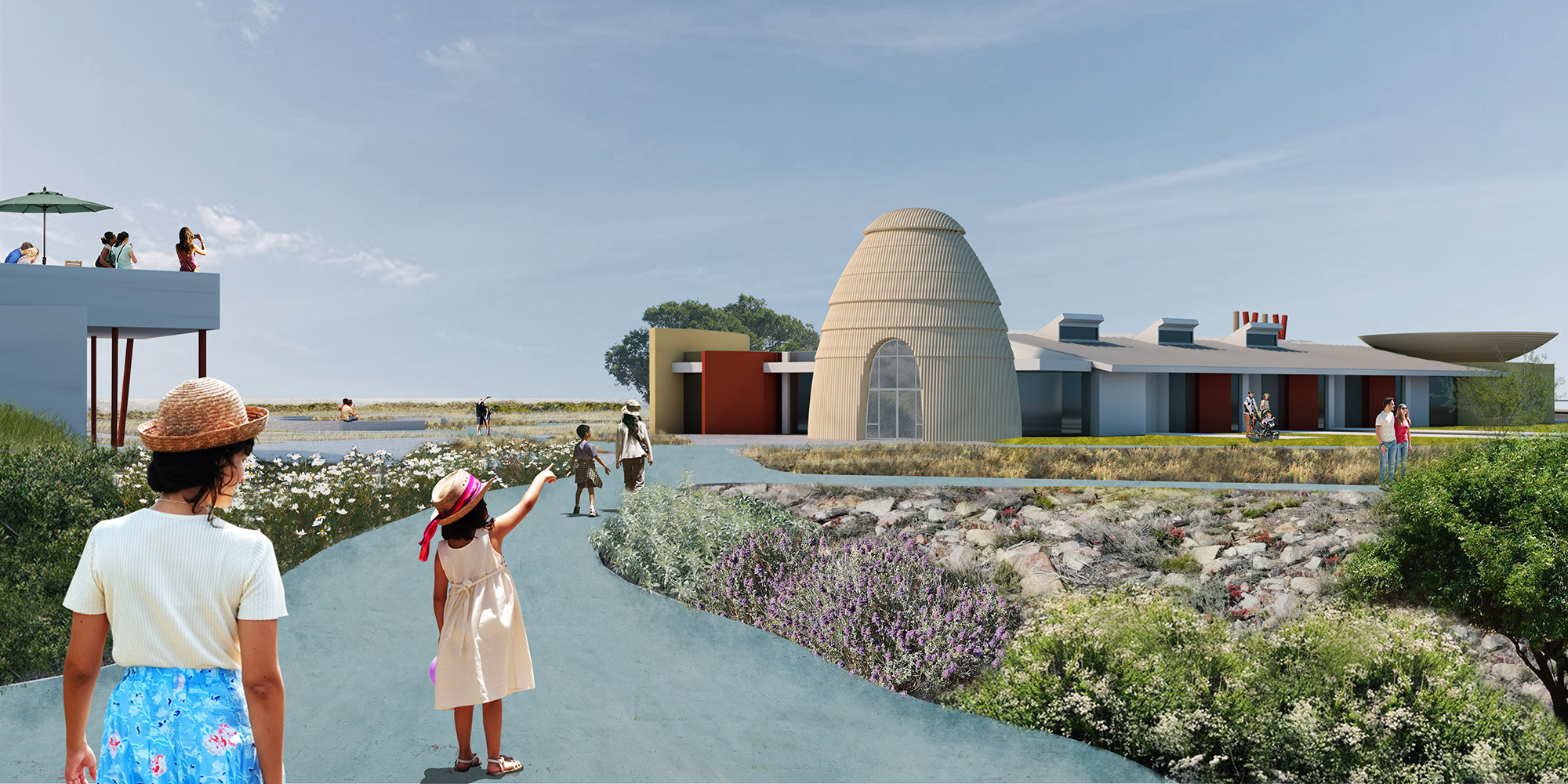
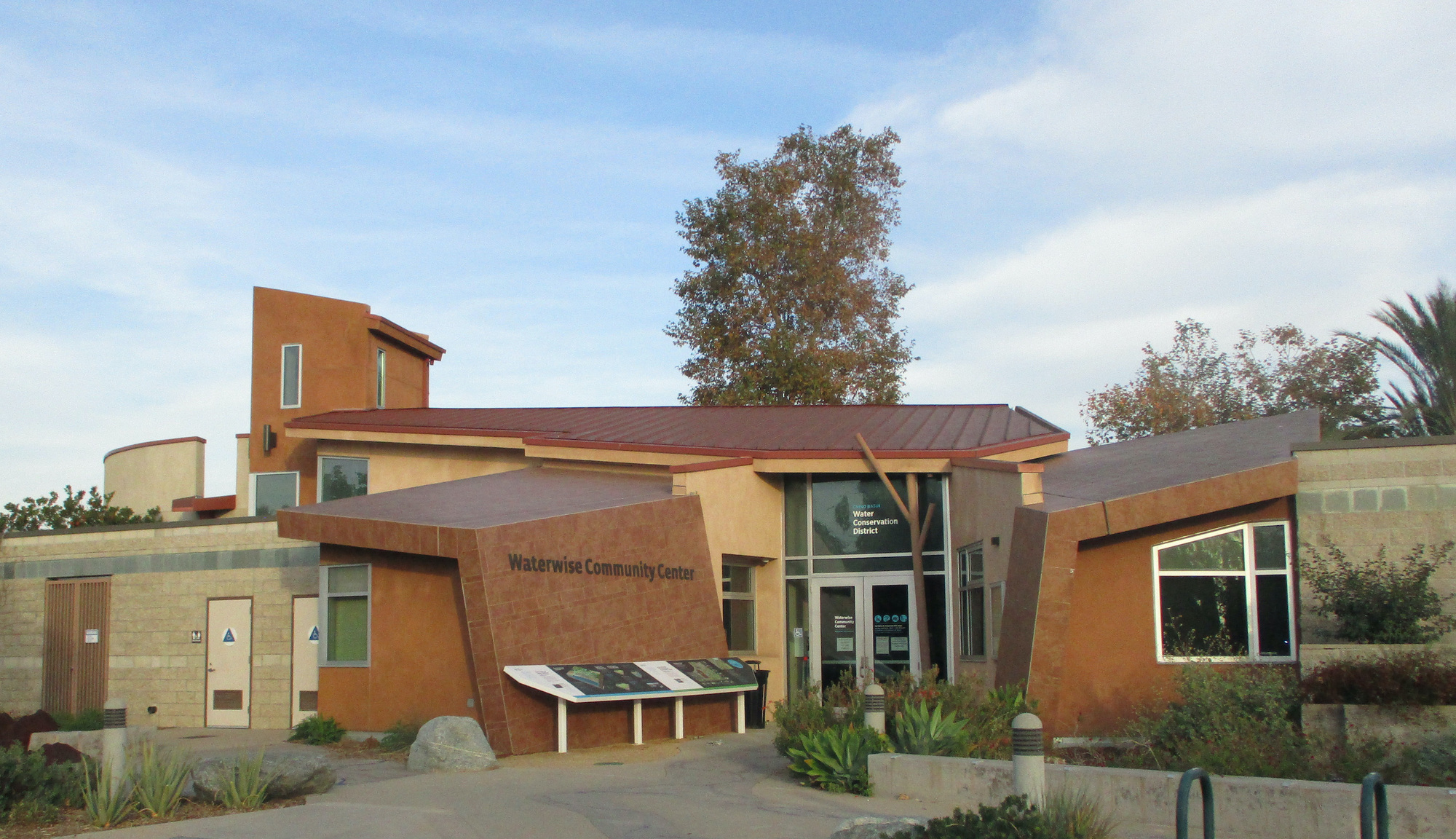
Stay tuned after the outro to hear Carl talk more about Chinese landscape painting.
This episode was edited and mastered by Troy Lococo.
Transcript
[Intro music] Skipper Chong Warson: Hi, my name is Skipper Chong Warson. And I'm a design director in San Francisco. And welcome to How This Works. This is a show where I invite people on to talk about a topic that they know incredibly well. And today, I have Carl Welty with me. He's going to talk to us about being an architect and his work in sustainable design. Thanks for taking the time to be here, Carl.
Carl Welty: You're very welcome. And thank you for inviting me to this wonderful conversation.
Skipper
So, Carl, tell us some things about you. Who are you?
Carl
It's pretty clear that I think that we are obligated to leave the world better than what we, what it was when we found it.
Read Full Transcript Hide Full Transcript
Skipper
Okay.
Carl
And we are now at a crossroads in human history where that's an enormous challenge and we have much much work to do on that. A few other things are that I like -- when asked that question -- it's fun to tell people I was born in Roswell, New Mexico. And in a further conversation about the way I approach architecture, some people think that the fact I was born in Roswell, New Mexico has an influence on how I think about architecture.
Skipper
And specifically, if people don't know much about Roswell, one of the things that it's really well known for is this notion of aliens and -- isn't Area 52, is that what it is Area 52?
Carl
Area 51.
Skipper
51.
Carl
I know this because I was an Air Force brat, which is why I was born in Roswell, New Mexico. Area 51 is in Nevada.
Skipper
Okay.
Carl
Roswell is famous because of the -- in 1949, there was a supposed crash of an alien ship and the Air Force did an autopsy --
Skipper
Okay.
Carl
On an alien. So that's quite different than Area 51.
Skipper
Okay, I see. Shows how much I know about Roswell, New Mexico. So that was in 1949, is when it allegedly happened?
Carl
Yes.
Skipper
Okay. Born in Roswell, you were an Air Force brat, where else in the world did you end up?
Carl
I wasn't so traumatized by moving too many times, because I was younger, the youngest in my family. But so Roswell, lived in Turkey, and this is in the late 60s, which was a great experience. And in California, but Turkey, climbing around old castles and seeing old ruins has shaped the way I think about architecture and sustainability. It's particularly this lesson of civilizations and how cities come and go. And this is always in the back of my mind with the question of preparing for climate change, or how we, you know, can build cities that are more resilient and more efficient.
Skipper
Okay.
Carl
So this -- the history of past cultures looms large in my thinking and how I approach design.
Skipper
I see. So Carl, what's something about you that people may not guess? Something you feel comfortable sharing?
Carl
(Laughs) Oh, I thought being born in Roswell was --
Skipper
(Laughs) That's definitely an interesting fact, for sure. Yeah.
Carl
Here's the first thing that comes to mind and which is something that's kind of an emotional thing that I deal with it in that I'm a sensitive or thoughtful artist. Because I'm kind of a big guy.
Skipper
Okay.
Carl
I often sometimes just say, I say that people think of me as a contractor and not a designer, not an architect because I look more like a contractor than an architect.
Skipper
Okay. Well, and I also think there's an important lesson in that we're not always who we might present as. So I appreciate that.
Carl
Thanks.
Skipper
So Carl, what are we talking about today? I mean, I gave some of it away in our introduction, but I'd love to hear you say it -- what are the things that we're going to talk about, that you know a lot about?
Carl
We're going to talk about sustainable design, which is in the minds of many people and sustainable -- or there's a term that I prefer regenerative design. And we can say more about that, but how do we build affordable, energy-efficient, resilient homes and communities? So we can talk about that and also near to my heart and soul is art -- not art as artifacts or design. But I believe art when it operates at its highest level says something about how we have in the past seen the world.
Skipper
Okay.
Carl
But I think also we're going to talk about how art has shaped how we, how we understand or see nature, or see the world outside of us.
Skipper
Sure.
Carl
Specifically, talk about my take on Renaissance art, and what we call modern art or European 20th-century art, Cubism and Picasso, and modern art.
Skipper
Awesome, all of that is -- they're very meaty subjects. So I say we jump right in. (Pauses) So what in your mind is sustainable design? How would you define it? And then you also mentioned another term, this idea of regenerative design, how is for you the idea of regenerative design a more appropriate term for how you think about this topic?
Carl
So regenerative design, and it can feel like a new buzzword.
Skipper
Okay.
Carl
But I think in the history of sustainable thinking, in the last 30-40 years, it really predates sustainable design.
Skipper
Okay.
Carl
And regenerative design is building community, building buildings, a home in a way that works more like nature or generates energy. A great example that people like to use is a tree. A tree creates 200 times more energy than it requires.
Skipper
Oh, wow.
Carl
So the leaves that grow, that helps absorb, you know, absorb the energy, as they fall off, in that sort of cycle. Those leaves become compost or energy that goes back into the earth.
Skipper
Okay.
Carl
Other systems other and, you know, other plants and animals who use that energy. Another, I think, important distinction is sustainable design is using less.
Skipper
Okay.
Carl
So it's about conserving but regenerative, regenerative is about creating systems that create more like the tree. So in closing, I'd say that we're past the point where just using less is enough. As I said, we have to build communities that create energy or create resources, like all other species or other systems. Regenerative is a better -- It's a better goal.
Skipper
Hmm. I think that those are really important distinctions between sustainable design and regenerative design. And that idea that a tree creates 200 times more energy than it needs, I don't know that I ever thought about it that way. That's a fascinating way to position that. (Pauses) So, what are things that, you know, and like you pointed out, the notion of being sustainable is about conserving and using less and being more responsible with existing resources -- what do we need to be thinking about for the future? Like, what are some of the issues that you see at hand?
Carl
Well, since I'm an architect, I'll talk about the future of buildings and building communities.
Skipper
Sure.
Carl
And starting from the inspiration of creating buildings and communities that are operating in a way that's generating energy and not just consuming energy.
Skipper
Okay.
Carl
We're starting to make buildings with solar panels, which is an example of generating energy on-site or with a building, generating energy in a clearly more efficient way than burning fossil fuels and carbon-based energy systems. We can all agree that using solar panels is more sustainable than burning fossil fuels.
Skipper
Sure.
Carl
Certainly less impact on global climate in increasing the carbon dioxide in our environment.
Skipper
Yeah.
Carl
In addition, a better course for regenerative design or building buildings and communities is working with nature more holistically.
Skipper
Okay.
Carl
It's shockingly, I think, simpler and how we do that. The quickest way to explain that or the science of that was well established and researched in the '70s.
Skipper
Okay.
Carl
So we have what we call passive solar design.
Skipper
Okay.
Carl
That's sort of the first thing to go to. Simply put, at the first level, passive solar design is about orienting buildings to the south.
Skipper
Okay.
Carl
And when you do that, then you can start absorbing energy directly from the sun. I think a simpler and more cost-effective way of heating and cooling our buildings --
Skipper
Okay.
Carl
And lighting our buildings than using solar panels or other machines.
Skipper
Okay.
Carl
And then we'll talk more about that but I think that with my approach to sustainable regenerative design, using nature or passive solar, it stands in contrast, it's a little outside of the way the typical approach to energy efficiency is thought of. At the core of it is working with nature, again, more organically and more in a homegrown sort of way. And it really literally is building buildings that heat and cool themselves. Reusing the parts of a building that we would include anyways.
Skipper
Sure. So if this notion of passive solar design has been around since the '70s, I would imagine that architects and home builders and people who do commercial construction, they've all been doing it, taking advantage of these things, to build houses and office buildings and other kinds of spaces, right?
Carl
You would think that, but they haven't.
Skipper
Oh, that's disappointing.
Carl
So I'm old enough to have gone to school in the '70s and early '80s.
Skipper
Okay. And did you go to school to study architecture?
Carl
I did.
Skipper
Okay.
Carl
I went to Cal Poly San Luis Obispo
Skipper
Okay.
Carl
Lovely place to go to college.
Skipper
Yes.
Carl
And, you know, this was the late '70s and the late '70s was really the peak in the thinking of this.
Skipper
Okay.
Carl
And I had a class called passive solar design in 1979.
Skipper
Okay.
Carl
Taught by a gentleman who's still alive, who's a real national leader in passive solar design, and --
Skipper
What is his name?
Carl
His name is Ken Haggard.
Skipper
Okay.
Carl
H-A-G-G-A-R-D. For another project that we're working on, I've had the opportunity to reach out to him and because I thought he has so much to teach us still. And he does.
Skipper
Yeah, that's great.
Carl
So this is the history of passive solar in the '70s. It was inspired or necessitated by the oil embargo, from '73 and '79. And at the time, we started to think that we would reach peak oil sometime in the early 21st century.
Skipper
Okay.
Carl
And much like today, where the state of California encourages us to be innovative with solar panels and other energy systems.
Skipper
Yeah.
Carl
The state of California was paying people like Ken Haggard to write books and do research on building homes and structures that were more energy-efficient.
Skipper
Okay.
Carl
So it's a really great history that, perhaps could be its own show, but he built a home in 1972 --
Skipper
Okay.
Carl
That was heated and cooled 100% by natural systems.
Skipper
Oh, wow.
Carl
And the cost of, in general about passive solar or these kinds of systems, they really don't add construction costs to the buildings.
Skipper
Okay.
Carl
And they remain, you know, they're more efficient than the best approach, most expensive approach we have today. I like to summarize that a well designed passive solar building doesn't add cost to the construction. And you can approach 50% more efficiency than a normal building, you can increase the cost, the construction cost a little bit and get that up to beyond 50% -- generally speaking.
Skipper
Yeah.
Carl
But it's, you know, the typical green building that we think about today, we sort of peak out about 30% better than normal.
Skipper
Oh, really?
Carl
And can increase the construction costs 50% or more.
Skipper
Okay.
Carl
To me, it's an extraordinary opportunity to become more aware of how we, you know, we can build, we can make buildings two and three times more efficient than what we think of as the best buildings without increasing construction cost.
Skipper
Sure.
Carl
It's not pursued very much.
Skipper
Okay. In a previous conversation, Carl, you and I talked about how, and you shared this fact with me so I'm just repeating back something that you had talked about, but by last year, by 2020, the state of California was requiring that all new construction of homes needed to be NetZero energy. And one of the things you pointed out to me is that homes consume about one-third of the energy used in the state. So it seems like there's a strong incentive to do things like passive solar design, and especially if it doesn't add much more in terms of construction costs. Why aren't builders or architects or other folks in the construction industry, why aren't they taking advantage of these things?
Carl
Let me go back to the history of passive solar. So, as I said, the peak of the research or the interest in this was the '70s and early '80s.
Skipper
Okay.
Carl
And to your question of, Why aren't we doing that more? I believe we lost interest in that the development industry, or the design industry, lost interest in this because of Ronald Reagan in the early '80s. And oil became very cheap in the '80s. So there wasn't the incentive as in the '70s, you know, from the threat of oil embargoes and loss of energy.
Skipper
Sure.
Carl
And so cheap oil from the '80s and '90s, we've lost focus on this other way of building.
Skipper
Okay.
Carl
Another part of it is, is culturally when architects -- and I think this is part of our culture -- when we look to machines to solve our problems. And I think that through passive solar or these other natural systems, it's a different way of thinking, you know, that we have to stop and pause and, you know, ask the question, Can we do better? Kind of looking at nature and seeing how nature works and is inspired by that.
Skipper
Yeah. What are some of the strategies that you would point out things that builders, architects, and homeowners can do to take advantage of something like that?
Carl
Great question. I've come to this thinking that, you know, when I talk about working with nature, there are four things in nature that we have to be aware of --
Skipper
Okay.
Carl
And it's all very simple and very obvious. But the first one is the sun is higher in the summer than it is in the winter.
Skipper
Okay.
Carl
And I think we're aware of that, but not really, it can be more forward in our minds.
Skipper
Sure.
Carl
Number two is the sun rises in the east, and sets in the west and the sun is in each day, the highest point of the day, the sun is more or less, due south. Okay. And the third part, the third sort of aspects of nature, and this is particularly true in California or other dry desert climates or climate zones that are not hot and humid, the nighttime temperature is always 25 to 30 degrees cooler than in the daytime. So we can use that to help cool our buildings. So this passive solar or with natural systems, it's not just about heating, but it's also about cooling the buildings naturally.
Okay. And the fourth part is that we can in any location, you can rely on prevailing winds or breezes that are pretty consistent.
Skipper
Yeah.
Carl
So the first step in past solar is just sort of saying this is what nature provides us.
Skipper
Yeah.
Carl
And if you work within these rules, or this how what nature has we can provided us, you can do extraordinary things and make buildings and communities affordable, much more efficient, and more resilient.
Skipper
Okay.
Carl
But the other thing we also talked about -- and maybe we're getting ahead of ourselves -- but the next, how we use those facts of nature is to think about the building, not as this box that has energy flowing into it from the energy grid, or the building that's just a box that has machines on the top, solar panels, or machines inside to provide thermal comfort or energy, I start to think about this question of, How we can think about the building envelope as an energy system?
Skipper
I see.
Carl
And I think that's a good way to think about it. And what I mean is the parts of the buildings -- so this is the flip side of these facts of how nature works.
Skipper
Okay.
Carl
But the parts of the building that we have to think, you know, we can think about as systems -- energy systems -- are the things that are in buildings. Windows, roof overhangs, walls, well-insulated walls, and the concrete usually, typically a concrete slab or, or something, it's in the building that acts as an energy storage system.
Skipper
Okay.
Carl
And that's what we call thermal mass. The easiest things to think about are concrete or water or something that will absorb heat. In the wintertime, you want the sun to come into the window.
Skipper
Yeah.
Carl
And heat that thermal mass up. And then at night, when it's cooler, that heat radiates out to heat the space.
Skipper
Yeah.
Carl
And the flip side of that is in the summer, you use the roof overhangs to keep the sun out to start with so the building doesn't get as hot.
Skipper
Mm-hmm.
Carl
And that thermal mass, that energy storage system, is cooled by the cool night air by ventilation.
Skipper
I see.
Carl
So during the day, that chilled thermal mass absorbs the heat that comes into the building, keeping the building cooler. So maybe something people might know about is old adobe structures work that way.
Skipper
Okay.
Carl
Except that they don't have insulation. So you want the building to be insulated as well.
Skipper
Yeah.
Carl
So to me this idea that the building is an energy system and a storage system. And why it's so cost-effective is it's just using the stuff that buildings are composed of -- windows and roof overhangs.
Skipper
Yeah.
Carl
And it's just about locating them differently, thinking about that differently. And when that's done, then you get a building that's 50% or more efficient than a normal building without increasing the construction costs. You just use the things that are already there.
Skipper
Yeah. I think those things are important to consider as you're making a house, right, but what about someplace that you already live in? Let's say you're renting or you've moved into an existing house -- how are ways that you can take advantage of that passive solar effect for a better purpose?
Carl
Another great question. When I talk about these questions -- in which I do a lot -- people often say, Well, what about existing buildings?
Skipper
Sure.
Carl
First thing is, there's always something that can be done and of course, easier to do in a building that you own and not renting.
Skipper
Sure.
Carl
But for me, the first example is that existing buildings don't typically have the correct orientation. And many buildings, we know, many existing buildings don't have that optimal orientation but what can be done easily is the ventilation -- using nighttime ventilation for cooling a building.
Skipper
Yeah.
Carl
And this is why it's important to think about passive solar, not just about the sun and heating, but also cooling. In much of California, the energy required to keep the building cool is more or less the same as keeping it warm or sometimes requires more energy. And as with climate change and global warming, cooling will become more and more important.
Skipper
Yeah.
Carl
So an existing home or building with some, I think, pretty simple retrofitting, you can start ventilating, you know, designing the building to be vented at night to take that cooler night air to cool off thermal mass.
Skipper
Yeah.
Carl
So things can be done.
Skipper
Okay. I like the previous example that you gave of an adobe structure, and how there were certain advantages, but one of the disadvantages of adobe is that it's not well insulated. And I think that's something that if you are in a home environment where you can't make many changes, maybe that's something that you could do is put up curtains or blinds as a way of insulating against the sun. And then those are things that you can open up at night to facilitate that ventilation.
Carl
Yeah, that's really it. And I would also add that insulating is what we think of as the first step to making older homes more efficient. If an existing home or structure has, you know, too much sun coming in from the west, which is pretty common.
Skipper
Yeah.
Carl
Another simple natural system is planting trees for shading.
Skipper
Okay.
Carl
And you can plant deciduous trees that will let the sun in, in the winter because they lose their leaves and shade the structure from the summer sun.
Skipper
Okay.
Carl
That, to me, that's another, I think, a beautiful example of what nature provides us.
Skipper
Yeah.
Carl
Maybe I should also just add this, in addition to the building as an energy system, I think about the landscape as part of the building energy system, which I think is another kind of leap or thing to think about. So it's not just we have a building, and then the landscape is this thing you do on the outside that's just for decoration.
Skipper
I see. You've mentioned a couple of times in our conversation, the idea of climate change and how our natural world is changing from what it was a few decades ago. And I know -- my wife and I just moved from New York City and one of the things that we've encountered (and we live in the Bay Area) is this notion of having a fire season -- and not only the dangers of that because it's so dry, fires breaking out that are caused naturally. There were some fires here that happened last summer that were as a result of lightning strikes or deliberate causes. And so one of the things that you and I talked about in a previous conversation is this idea of how we think about our homes can also influence those things, this threat of fire existing in the world. Can you talk a little bit more about that?
Carl
Yeah, this is a really important part of building sustainable or resilient communities to California or much of the West is this threat of wildfires. In California and the West, there have always been fires or they have always been a problem.
Skipper
Yeah.
Carl
Even long before white man came.
Skipper
Yeah.
Carl
But with climate change, the season of wildfires is now almost the entire year.
Skipper
Right.
Carl
You know, we all know that, that is such an increased risk of fire.
Skipper
Yeah.
Carl
And so, for me, building more fire-resistant homes is supercritical, because there's you know, 1000s and 1000s of people who want to rebuild, and we'd like to rebuild in areas that will continue to have a fire risk, this is the second part of the second half of my thinking about sustainable design -- the construction and so on, and this is under the category of resilient.
Skipper
Okay.
Carl
Building resilient or more durable. And so the so this, the two halves are for me is energy, the energy component, and --
Skipper
Sure.
Carl
Talk about using nature to solve that problem. So the other half is resilient. And so resilient is resilient, durable. So for me the I think, again, an affordable solution for more fire-resistant, more resilient homes and communities is not building with wood.
Skipper
Okay.
Carl
The first level is because wood is combustible, right? And there's, there are ways we build and there are codes that, that require us to build homes that are more fire-resistant.
Skipper
Okay.
Carl
But in the end, it's more combustible compared to other materials.
Skipper
Didn't we learn this lesson and three little pigs with the second little pig?
Carl
(Laughs) So for me, I think my first choice solution for homes is building with light gauge steel.
Skipper
Okay,
Carl
For me, the questioning of not building with wood started 20 years ago with working on two home projects. One is I wanted to have a beautiful post exposed to be stained, and you know, to express the beauty of the wood.
Skipper
Okay.
Carl
And I specified what you know, with the highest quality wood one can get. Sure. And so this post, a 4" by 4" post was delivered to the site and it looked really great. But within a week or so, on the site and contractors or they've been bringing lumber and flooring and materials --
Skipper
Materials, sure.
Carl
They bring them to the site and they acclimate to the moisture of the site.
Skipper
Sure.
Carl
And so within a week, that beautiful post twisted and split. It was not going to work the way I wanted it to work. The other lesson around the same time was a client had just finished a second large two-story addition to their house. And their exterminator advised him to tent the house immediately after finishing.
Skipper
What is tint?
Carl
Tent, tenting to exterminate.
Skipper
Oh, I see.
Carl
To kill termites.
Skipper
I see.
Carl
And I was surprised by that because, you know, it's all-new lumber.
Skipper
Right.
Carl
And that their exterminator told him that the new lumber is bringing termites into the house.
Skipper
Oh, wow.
Carl
And some learning and subsequent research and that are a whole other universe.
Skipper
Sure.
Carl
Is that the termites -- it's a big issue and again, it's another issue that's going to become a larger issue because of climate change in this new species of more aggressive termites and that's a whole other story. We all know that termites are a problem.
Skipper
Okay.
Carl
And so backing up a bit with this issue of wood, in addition to trying to find an alternative that's not as combustible.
Skipper
Okay.
Carl
What I've learned is, you know, the wood we have today is not like the wood we had 100 years ago. Particularly, I mean, California, we all know beautiful old Craftsman homes that are beautiful, and they look great like they did 100 years ago.
Skipper
Yeah.
Carl
But all that lumber was old-growth lumber.
Skipper
I see.
Carl
So it's very old trees that we don't have anymore. And it's even -- if we could log it, we shouldn't, for all the reasons we understand.
Skipper
Right?
Carl
And so most of the framing construction through the '70s was old-growth lumber.
Skipper
Okay.
Carl
And so in the '80s when that lumber was no longer available, the quality of lumber has continued to degrade since then. And so now we have lumber that's, it's grown very fast.
Skipper
Okay.
Carl
For economic reasons. And that's because the lumber has been grown fast, cut down earlier, you know, younger, it's not as stable. So in addition to being more flammable, it's just not as stable as the lumber from long ago.
Skipper
Yeah.
Carl
So if you're looking for affordable systems, alternative systems, like cold form steel, or light gauge steel.
Skipper
Yeah.
Carl
For me, it has to be affordable.
Skipper
Yeah.
Carl
So we need systems that people can afford.
Skipper
Yeah, I mean, that doesn't feel like a very winning proposition to have lumber that is more flammable, less stable, and as termite species are changing, tends to attract more termites as well. That sounds like a bad proposition.
Carl
I believe so. The termite species that we're most concerned about Formosan termite and the center of these termites in America is Florida and New Orleans.
Skipper
Okay.
Carl
They swarm in larger colonies.
Skipper
Okay.
Carl
Really big colonies. And they're, as I said, they're more aggressive. And, you know, there are stories from New Orleans, where, you know, a two-story wood wall is completely demolished, and within a couple of years.
Skipper
Wow.
Carl
So it's pretty, it's really different.
Skipper
Yeah.
Carl
As animal species do, they migrate. And as this climate gets warmer and warmer up to the north and to the west.
Skipper
Yeah.
Carl
They continue to migrate -- they are colonies in California. So that, to me, is that an issue that's looming out there.
Skipper
Yeah.
Carl
We need to think about --
Skipper
Yeah.
Carl
So in recapping this idea of the energy issue and then also resilient, resiliency, or durable. So building with steel, this is a way to build non-combustible and increased fire resistance but it's also, you know, it's a structural system that's good for hundreds of years.
Skipper
Yeah.
Carl
And even without termites or fire, I think the wood home built from the lumber that's available today, it's certainly not going to last 100 years, even, you know, if it's covered up in stucco walls.
Skipper
Sure.
Carl
So building with cold form steel and other systems, we can dependably build something that will last hundreds of years --
Skipper
I see.
Carl
Without requiring chemicals for killing termites and more fire-resistant, less or no mold. So anyway, that's the sort of two parts of sustainable design -- resilient and energy-efficient.
Skipper
Okay. Well, I love that you brought up this notion of a building that lasts for hundreds of years. So I want to get into one of the other topics that you had previewed, which is around an interest you have in art. And that has influenced the way that you think about this notion of sustainable design or regenerative design. Can you talk a little bit about where that started for you? How did that begin?
Carl
Kind of sheepishly or maybe because of my background or my technical training, I always have felt embarrassed about these esoteric ideas. In some ways, this questioning or this interest in history comes from again, living in Turkey and having the experience of history being real -- and climbing on old castles or ruined cities. And so in college, I stumbled upon a history class -- that at schools like Cal Poly, where it's a very technically oriented education, stumbling into a class on medieval history was outside the norm, it was unusual. But as a young architecture student, I think of a lesson I learned in this class from a teacher who was very inspiring was if I were to read more, I would learn more.
Skipper
Sure.
Carl
And as a kid coming from a family that education wasn't such a high priority, that was a lesson that I had to learn. Anyway, so from that class, I just started to read more from the library that was beyond what we were required in our architectural history classes. And I want to preface it, in architecture school we were taught and we are still taught that drawing perspective. It's real.
Skipper
Yeah.
Carl
That's how we see the world.
Skipper
Yeah.
Carl
And when I say perspective, it's specifically linear perspective or this perspective that was highlighted in High Renaissance art.
Skipper
Okay.
Carl
So starting from this idea that we're taught to believe that drawing perspective is real, it's accurate. It's a true representation of nature.
Skipper
Okay.
Carl
I can also say that in architecture school, architects were taught to believe that. And we're taught how to draw those. But it's a cultural norm as well. So even outside of architects, for people who are taught to draw though, that way, our culture reminds us that perspective is real or photographs -- our cameras work that way or cameras prove it, you know, every time we take a picture, they prove that, Oh, yes, that's the way those rules worked.
Skipper
Okay.
Carl
That's how we see nature.
Skipper
Yeah.
Carl
In some reading I was doing outside of my history classes, I learned that perspective was invented in 1413.
Skipper
Oh, wow.
Carl
Which is -- some people say that, because of a very important architect Brunelleschi who's most known for building the dome in Florence. But in 1413, he made a painting of the baptistry in Florence.
Skipper
Okay.
Carl
And he codified the rules that we use for making precise perspective drawings.
Skipper
Okay.
Carl
And so that was in 1413. And it immediately galvanized artists -- or artists started to see that it was the right way to do it.
Skipper
Okay.
Carl
And it really ushered in the High Renaissance. And quickly, it started influencing how artists were making paintings, how architects were making cities or buildings and impacted urban design. And subsequently, it influenced Western science. There are lots of really wonderful books that I stumbled upon when I was on this quest as I finished college. And it is the leap into western science, I think particularly came from artists who started to develop these, what they call prospective machines.
Skipper
Okay.
Carl
The first one that we kind of know about, the most famous was by Dürer, the Dutch painter.
Skipper
Okay.
Carl
And I think if anybody's had an art history class, you've seen these images of particularly, there are some really famous etchings of Dürer, you know, the artist looking through a picture frame with a grid, and looking out to nature or looking to a subject and they transfer that subject or object or view of nature onto a piece of paper with the same grid.
Skipper
Oh, interesting.
Carl
And so these perspective machines were not just used by artists, but they were used by the hobbyist scientists from the 1500s into the 1700s. You know, the aristocrat artists and scientists would have these machines were part of like having a microscope, they'd have a perspective machine. So the sense of it, I think, within the history of the perspective machines is how it started us to think about that we can represent nature in nature with 100% certainty with objectivity.
Skipper
Yeah.
Carl
As a hobbyist historian, I like to say that moment in 1413 was this moment of separation in Western culture from nature.
Skipper
Hmm.
Carl
So the flip side of this, which in Western culture is, you know, Cubism and initially started with the impressionists. One of the things that they're trying to do is find a way to represent nature that was not so predetermined as perspective.
Skipper
Okay.
Carl
And so, you know, Monet's painting of the sun changing on the haystacks.
Skipper
Sure.
Carl
And that evolved into Picasso and Cubism, where they really started to deconstruct or change the pictorial structures, you have multiview, and different moments of time.
Skipper
Sure.
Carl
Completely influenced by Chinese landscape painting. And so this other thinking about art from other cultures -- that this idea that, except for the success of Western imperialism, or Western colonialism/European colonialism, that all other cultures represented nature in a way that was more like Cubism, more like Chinese landscape painting.
Skipper
Okay.
Carl
Chinese landscape painting offers an insight on how to think about representing nature in a way that's more organic.
Skipper
Okay.
Carl
And that mode of thinking has influenced how I think about architecture in some ways, it shaped how I designed this particular building.
Skipper
Yeah.
Carl
That engages the local landscape in geography, I think more naturally.
Skipper
Yeah. Speaking of landscape and geography, you have a project that you're currently working on in Orange County, that speaks directly to this idea of sustainable design or regenerative design, and how we can do better. Would you talk a little bit about that project?
Carl
Yes. (Laughs) We feel enormously privileged to be part of the project. The project is specifically the Banning Ranch site.
Skipper
Okay.
Carl
And our client was is a local nonprofit that's spent 20 years stopping private development on the largest, privately owned, undeveloped site on the coast of Orange County.
Skipper
Oh, okay.
Carl
The efforts to stop the development culminated in 2017, with a Supreme Court, California State Supreme Court ruling, that really upheld the California Coastal Act and other laws in California that are in place to protect the environment.
Skipper
Okay.
Carl
The effort to stop that private development of being home to, you know, 1500 homes, a large hotel, kind of the stuff that we know all too well, they were able to stop it not just because it was the right thing to do but because the state Coastal Act was there and it establishes rules and how you develop protected sensitive habitat.
Skipper
Okay.
Carl
So the site is a 400-acre site. Again, it's on the coast and it's been an oil field since 1943. Kind of ironically, because it's been an oil field since 1943 and fenced off with very little human contact, native California Coastal grass and other coastal Sage scrub, the natural habitat has been saved.
Skipper
Oh, wow. What was it before it was an oil field?
Carl
Before it was an oil field, it was a cattle ranch.
Skipper
Okay.
Carl
The project is exciting. It's a very large site. And there's an ambitious goal to restore it to pre-development standards. And the part that's really exciting for me is building an Education Research Campus with multiple buildings.
Skipper
Okay.
Carl
But the site is the most important part of this project and the goal is to tell the history of the site and the history of the site is the history of Native Americans.
Skipper
Okay.
Carl
And so --
Skipper
Even before it was a cattle ranch?
Carl
Yes, before as a cattle ranch.
Skipper
I see.
Carl
So the goal or what the project should be about, I think is embodied in these principles about working with nature. And even before this project, I thought that other cultures, particularly Native American cultures, that we think we all can agree upon and accept that they knew how to work with nature and live with nature, so much more in a healthy, nondestructive way than what we Europeans have done.
Skipper
Yeah.
Carl
So the first look at the project, there are two parts of it -- first is restoring the natural habitat. And it's not just the plants but it's also the animals and endangered animals that use that natural habitat to live — the burrowing owl, for instance. And restoring some wetlands because it's also very close to the Santa Ana River.
Skipper
Okay.
Carl
So it's this restoring of this, but it's telling the story of the Native Americans who lived on that site, and they're the Acjachemen. And they're the kind of primary tribe of Orange County.
Skipper
Okay.
Carl
So the history of the Acjachemen and the history of the site are just completely linked together. So the Acjachemen lived on the site for 12,000 years or more. So there was an Acjachemen village, a large village on that site.
Skipper
Okay.
Carl
For 12,000 years. And when the Spanish came in the 1770s, they relocated them to build the mission, San Juan Capistrano and the Spanish turned it into a cattle ranch.
Skipper
Hmm.
Carl
Which immediately started to degrade the grasses in the natural habitat.
Skipper
Sure.
Carl
Because cows are an invasive species. And so as a cattle ranch from the 1770s until 1943, when, because of the war, the need for oil. And so the history of the site is the history of European colonialism of the extractive economy.
Skipper
Yeah.
Carl
Using nature in a way that will be around for 12,000 years.
Skipper
Yeah.
Carl
And obviously, the fact that the people, these Acjachemen were relocated, it's also the story of environmental injustice.
Skipper
Yeah.
Carl
So our approach to designing the project and the project is we're designed a vision design and it's, you know, years away from political struggles still to be overcome before the next steps. But the goal of the development is in the research and the education is to tell the story of the Acjachemen, not just to tell their story, but to learn their lessons.
Skipper
I see.
Carl
And represent those lessons in the buildings as a way to build modern communities that embody those ideas of living for 1000s of years in harmony with nature.
Skipper
Yeah.
Carl
See, we also talked about another advantage to homes that are heating cold themselves regardless of the energy source -- if we also know that, with fires and our uncertain future that our energy grid may not be so reliable.
Skipper
Yeah.
Carl
And we're already losing their power, their power's being turned off because of fires. So if a house can cool itself, without using that energy, it's less of a problem.
Skipper
Yeah.
Carl
I invite people to think that, you know, that's just not to save our houses from a fire. But that's part of the symptom of the new norm.
Skipper
Yeah.
Carl
That's the impact of climate change. And so by just looking at nature in a way that Native Americans might've thought of it -- as a part of nature, not different from nature, we can find solutions to these problems that are starting to come at us. With greater speed and more frequency.
Skipper
Yeah.
Carl
And nature has a pretty extraordinary -- how many, you know, what we can do by working with nature and looking at history. And you know, how cities, how civilizations built cities, long before our modern energy grid.
Skipper
Yeah, it's not just about art history -- you and I have talked about this before -- but even the notion of architectural history, right, we can take lessons from the cooling towers of ancient Persia, or courtyard homes in Pompei, or, you know, Native American and cliff dwellings, or even something that we see a lot around California, that idea of hacienda roofs, right. So way that we build physical structures to adapt to our natural environment.
Carl
A lesson I've learned from working like this is that, you know, these decisions that you make, the design decisions you make to make a house more efficient and warmer -- it connects the structure to that local landscape. Particularly a project that I'm very proud of is near where I live in Pomona, a water education center (called Waterwise Community Center).
Skipper
Okay.
Carl
And in the process of designing it, you know, besides the question of, How do you design the entryway to a water education center? And it caused me, to inspire me, to go up into the local canyon that's visible from the site. And this is part of the regional water cycle and the geography. And I think, you know, to pause and ask, So how, you know, how do you do this? How does that, you know, how does this natural water system work? And I realized, well, a canyon, the canyon is part of it. So that inspired me to design the entrance to the building like a canyon. And the rest of it and other design decisions about how this building within this local regional landscape.
Skipper
Yeah.
Carl
So these decisions about both energy efficiency, but also kind of the cosmology or the philosophical sense about, or maybe the spiritual sense about the building in the landscape and nature. When one pauses and thinks about that, I mean, so many beautiful solutions come at you.
Skipper
Yeah.
Carl
It doesn't, I don't think it makes it harder. I think it makes it easier.
Skipper
So, Carl, we've talked about a lot of things during our conversation. But I want to make sure that there's something that we didn't miss that you really want to talk about, is there something that we haven't gone through that you really want to give some time to?
Carl
Maybe just kind of recapping you know, this Orange County project -- Banning Ranch.
Skipper
Okay.
Carl
It's been an extraordinary opportunity to work with the local tribal leaders and spiritual leaders of the tribe.
Skipper
Okay.
Carl
To learn in a deeper way what it means to be part of nature and how to embody those lessons to build a more sustainable, resilient future.
Skipper
Yeah.
Carl
And it just circles back around to, you know, the very beginning of even a simple drawing. We make drawings that are based on the rules of perspective or the way we start to make a drawing has a cultural bias or is it something we learn?
Skipper
Mm-hmm.
Carl
And so from projects and trying to think about making buildings more efficient. You know, these lessons about how we are part of nature.
Skipper
Yeah.
Carl
It has been really important to me. And I've been very much made to feel deeper by working with Native Americans, learning more and more, and connecting those ideas to environmental justice. And there's a U.N. policy, this is called Free and Prior Consent.
Skipper
Okay.
Carl
Something I want to learn, you know, and influence my work more and more -- particularly a woman that we've been working with, she's said that, you know, through the rules of this Free and Prior consent from the U.N., which means asking Native Americans, how should we really build in Free, Prior, and Informed Consent (FPIC).
Skipper
Okay.
Carl
And it's because you know, to these people -- like the Acjachemen in Orange County -- who, you know, their families have lived on the land for 1000s and 1000s and 1000s of years.
Skipper
Yeah.
Carl
That just there's the respect in wanting to work with nature, with the land.
Skipper
Yeah.
Carl
It's stronger, because, you know, their ancestors had been there for forever.
Skipper
Yeah.
Carl
And they think about their way of thinking about nature is also changes how they think about their ancestors. So I think it's really true. It's a really important idea to talk to indigenous people and ask them how to work with the land.
Skipper
Yeah.
Carl
So that's something we're excited about working with, you know, expanding with them.
Skipper
Hmm. Well, Carl, I'm really glad that you're working on the Orange County project. And I hope that it continues to grow and develop in the way that you've described it. So I thank you for your work.
Carl
Thank you.
Skipper
So we're coming to the end of our time together, unfortunately, because I feel like we could definitely delve more and deeper into all of the topics that we've just talked about. But I'd like to get into some of the closing questions that we ask all of our guests. And the first question is, For you, what's one of the most important lessons that you've learned so far in your life, or in your work, for that matter?
Carl
The importance of history, you know, and in the most reasonably the important lessons from Native Americans how we are a part of nature and the intention as an architect and building, trying to design sustainable. This question of apart from nature and not separate from it.
Skipper
Sure.
Carl
Is the starting point to define solutions that work, that are durable, resilient, and affordable.
Skipper
Yeah. Yeah, I'm hoping that a lot of other people take a cue from the spirit of the things that you're saying, even if they don't listen to this podcast, but they're able to grok and inhabit some of the things that we've talked about. Because I do think that we need to change, we can't continue living in the way that we have. We can't continue building, we can't continue making, we're a part of nature as well. How do we integrate instead of trying to be separate?
Carl
Yeah, how do we integrate not dominate?
Skipper
That's right. So what's something Carl, that you're excited about right now? Like something you're reading? Or maybe you're watching or listening to?
Carl
There are a couple more recent books that -- one is a book written in, I think in the early '80s, that machines are the measurement of man.
Skipper
Okay.
Carl
It's a really interesting social history of European colonial explorers with survey instruments measuring land. And there's another book that I can email it to you --
Skipper
Sure.
Carl
That really is a history of Europeans, the machines -- like the mechanical clock in the time of the Medieval Ages. And I think perspective, the invention of perspective as a part of that, that there's this part of the European culture, from medieval time into the Renaissance, where there's interest in developing machines and concepts that brought order to the world and created Western science and there's a tremendous benefit to that.
Skipper
Yeah.
Carl
But I think it's important to understand the limitations of these systems and how they have influenced the way we think.
Skipper
Yeah.
Carl
Pre 20th century science, European science, that was about measuring precisely, you know, with precision, and the basis of 20th-century physics is that in sciences, we really can't know nature without disrupting it.
Skipper
Oh, interesting. Okay.
Carl
And I think that's part of that lesson of understanding nature more holistically, more integrating it in -- not from the outside, not to dominate it.
Skipper
Yeah. We'll link to those books in the show notes. So that way people can find them easier. Just send them to me later. And we'll make sure that it gets in there. Where can people find out more about you, Carl? Do you have a website?
Carl
It's carlweltyarchitects.com, but we'll share that information --
Skipper
Yeah. Well, Carl, thanks so much for taking the time and making the space for our conversation. As before, I learned a bunch.
Carl
And I appreciate you, I appreciate your interest. Thank you so much.
Skipper
And thank you for listening to How This Works. This episode was edited and mastered by Troy Lococo. Please subscribe and leave us a review in your favorite podcast app. I have a favor to ask, Would you tell just one other person about the show and why they should listen to it? That would be great. You can find How This Works online at howthisworks.show. It's three words, no dashes. Again, that's howthisworks.show. We're also active in the places where social media does its thing. I hope that you learned something from my episode with Carl today. I, for sure, did. And we'll talk again soon.
[Outro music]
Carl
I'd love to find out where I read this — and this was probably 10 years ago. But it was a beautiful description of Chinese landscape painting, traditional landscape painting. And it said that a landscape Chinese landscape painting, which we're all too often taught isn't as sophisticated as Renaissance art and all of that stuff. It's just a different mode of representation.
Skipper
Okay.
Carl
And it comes from a different --
Skipper
Sure.
Carl
-- way of thinking about nature. But it's this -- it's such a great summary that said, this art historian said that the lands -- Chinese landscape painting requires you to imagine yourself in the landscape.
Skipper
Yeah.
Carl
You know, it's not that European view of looking to the window and objectifying it. It's that you have to project yourself into the landscape, which is actually you know, so although I think most of the important early 20th century European artists that have inspired me, they say things like that, and they say things like that because they were looking to Chinese art to answer some of those same questions.
Skipper
I see.
Episode Links
- How an Alien Autopsy Hoax Captured the World's Imagination for a Decade
- Ken Haggard
- Zero Net Energy
- Formosan subterranean termite
- Filippo Brunelleschi
- Albrecht Dürer
- Man Drawing a Lute (The Draughtsman of the Lute) from Fine Arts Museums of San Francisco
- Banning Ranch - About Us
- January 4-5, 2017 Oral Argument Cases in Banning Ranch case
- Acjachemen or Juaneño
- Waterwise Community Center
- Machines as the Measure of Men: Science, Technology, and Ideologies of Western Dominance to Collections by Michael Adas
- The Measure of Reality: Quantification in Western Europe, 1250-1600 by Alfred W. Crosby
- Carl Welty Architects
- Intro and outro song: "Zombie Nation" by Jose Travieso